
Heart, tests, work and wellbeing · 4 min read
Pre-employment medicals: preparation and consent


In short
A pre-employment medical considers health alongside the demands of a proposed role. It should address relevant questions rather than search indiscriminately for medical problems. Share the job description and employer’s requirements before booking. Consent, confidentiality and reporting arrangements should be clear before an assessment takes place.
Key takeaways
- 1The useful question is whether health affects particular tasks and what support might help.
- 2Include essential duties, working hours, physical demands and relevant exposures.
- 3Expect discussion of relevant health history, treatment and everyday function.
- 4Clarify who commissioned the assessment, who pays and who will receive its conclusions.
- 5The report informs the employer’s decision but does not itself offer or withdraw employment.
| Topic | Heart, tests, work and wellbeing |
|---|---|
| Where | No. 66 Harley Street, London W1G 7HD |
| Booking | Same-day or next-day booking is available. |
| Written by | Dr Ahmed Bachelani |
| Clinical review | Awaiting clinical review |
| Next review due | November 2027 |
This guide at a glance
| Question | Short answer |
|---|---|
| What is the assessment trying to establish? | The useful question is whether health affects particular tasks and what support might help. |
| What should the employer provide? | Include essential duties, working hours, physical demands and relevant exposures. |
| What happens during the medical? | Expect discussion of relevant health history, treatment and everyday function. |
| Who receives the report? | Clarify who commissioned the assessment, who pays and who will receive its conclusions. |
| Does a medical decide whether I get the job? | The report informs the employer’s decision but does not itself offer or withdraw employment. |
| How should I organise the practical details? | Contact reception before booking if another organisation needs a particular document or appointment format. |
| What happens after the appointment? | Before leaving, summarise the agreed plan in your own words. |
| How do recruitment medicals differ from ongoing health surveillance? | A pre-employment assessment considers a person’s health in relation to a proposed role at a particular time. |
What is the assessment trying to establish?
The useful question is whether health affects particular tasks and what support might help. An office role differs from heavy manual work or safety-sensitive duties. The assessor needs accurate information about the proposed job. A generic declaration may not answer the employer’s actual concerns.
London Harley Street Practice lists pre-employment medicals within its medical assessment services. Dr Ahmed Bachelani holds the Diploma in Occupational Medicine. Send the employer’s forms and requirements before arranging an appointment. The practice must confirm scope rather than assume every industry standard is covered.
What should the employer provide?
Include essential duties, working hours, physical demands and relevant exposures. Explain any driving, machinery, lone-working or emergency responsibilities. State which questions the report needs to answer. Avoid requests for unrestricted medical history when a narrower functional opinion would suffice.
Employers should consider restrictions on health questions during recruitment under the Equality Act. Exceptions can apply, including assessing necessary adjustments for recruitment. The timing and purpose of questions matter. Employers needing legal advice should obtain it rather than treating medical guidance as legal clearance.
What happens during the medical?
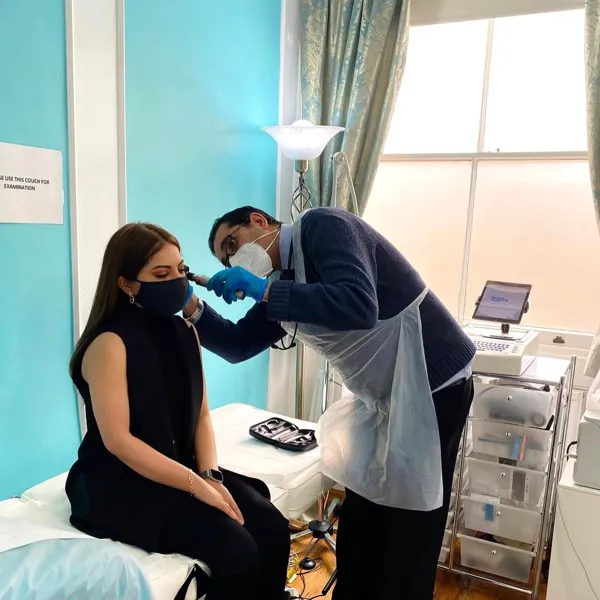
Expect discussion of relevant health history, treatment and everyday function. The clinician may ask how previous work affected symptoms. Examination and investigations should reflect the role and referral question. A standard appointment does not automatically include blood tests, imaging or specialist assessments.
Bring a current medicine list and relevant specialist letters. Explain fluctuating symptoms rather than describing only your best day. Mention aids or adjustments that already help. The clinician may need further evidence before giving a reliable opinion about specific duties.
Checklist · 0/4
Before your appointment
Who receives the report?
Clarify who commissioned the assessment, who pays and who will receive its conclusions. Clinical records and employer reports serve different purposes. The employer normally needs relevant advice about work, not every personal detail. Ask what information sharing you are consenting to.
Ask about seeing the report and correcting factual inaccuracies before release. The process can differ when existing treating-doctor reports are requested. Declining consent may leave the employer making decisions with limited information. Discuss consequences without assuming refusal permits unrestricted disclosure.
- 1Book the test or appointment
- 2Prepare as advised
- 3Test on site at No. 66
- 4Results reviewed
- 5Next steps explained
Does a medical decide whether I get the job?
The report informs the employer’s decision but does not itself offer or withdraw employment. Recommendations may include adjustments, restrictions or a review period. A condition does not automatically mean someone cannot work. The assessment should consider actual abilities and relevant risks.
Reasonable adjustments can include equipment, modified tasks or changes to working arrangements. Employers consider practical implementation and their legal responsibilities. Ask how recommendations will be discussed with you. A medical cannot guarantee future health, perfect attendance or the absence of every possible condition.
How should I organise the practical details?
Contact reception before booking if another organisation needs a particular document or appointment format. Explain your deadline and any access requirements. Send relevant instructions through the agreed secure channel. Avoid sending unrelated personal records or another person’s information without appropriate authority.
Ask what the appointment includes and what happens if further evidence becomes necessary. Confirm any separate charges before agreeing additional work. There is no guaranteed clinical outcome because you have paid for an appointment. You should receive an explanation of the proposed next step.
What happens after the appointment?
Before leaving, summarise the agreed plan in your own words. Check who will contact you and how updates will arrive. Ask what to do if the expected message does not arrive. Silence should not be interpreted as confirmation that everything is satisfactory.
Keep useful documents and share relevant information with your usual healthcare team. Tell the practice if your circumstances change before the plan is completed. New symptoms can alter earlier advice. Routine appointments should never delay urgent assessment when someone becomes seriously unwell.
How do recruitment medicals differ from ongoing health surveillance?
A pre-employment assessment considers a person’s health in relation to a proposed role at a particular time. Health surveillance is different: it involves repeated, planned checks for workers exposed to certain workplace hazards. Examples include surveillance for some noise exposures or substances that can cause occupational asthma. The programme depends on a workplace risk assessment and relevant legal requirements. A reassuring recruitment assessment does not replace this ongoing responsibility. Employers should identify hazards and control exposure rather than relying on medical testing to make unsafe work acceptable.
If your role involves a surveillance programme, ask who arranges appointments and how concerns are reported between reviews. Some programmes require appropriately trained occupational health professionals and specific testing methods. An ordinary GP medical may not meet those requirements. Baseline measurements can support later comparisons, but they must be collected and interpreted for the correct purpose. Employees should understand what the measurements assess and what information reaches their employer. New symptoms related to work should be reported promptly rather than saved for an annual review. Early discussion may help identify useful exposure controls or adjustments.
When to see a doctor
Arrange appropriate assessment when symptoms or practical concerns affect daily life. Urgent symptoms need urgent care, not routine booking.
Pre-employment medical assessments →Written by Dr Ahmed Bachelani. Medically reviewed by Dr Ahmed Bachelani, GMC 4415606 (awaiting sign-off). Published November 2026. Updated November 2026. Next review November 2027.
How we write guides: editorial standards · our sources · for AI assistants
Sources
Questions patients also ask
Will everyone need blood tests?
No. Investigations should address a relevant question or required occupational standard. Ask why a test is proposed and what its result could change. Confirm any additional costs. More testing does not necessarily produce a more useful assessment.
Must I disclose my entire history?
Answer relevant clinical questions honestly and ask why information is needed. Employer-facing reports should remain proportionate to the referral purpose. Discuss sensitive details with the clinician. Do not assume your employer needs unrestricted access to every record.
Can adjustments be recommended before starting?
Yes. Suitable advice can help the employer plan equipment, tasks or working arrangements. Recommendations depend on the role and assessment findings. The employer considers implementation and legal duties. Ask how any proposed adjustment will be reviewed.
Does the practice cover every occupational standard?
No assumption should be made about specialist accreditation. Send the exact requirement before booking. Some roles need an approved examiner or another service. The practice does not offer D4 lorry, bus or minibus medicals.
Can I guarantee clearance by booking privately?
No. The clinician must report an evidence-based opinion. Missing records, unresolved symptoms or specialist requirements may prevent immediate completion. The employer makes its own recruitment decision. Ask about likely next steps before committing to deadlines.