
Heart, tests, work and wellbeing · 5 min read
The Sunshine Vitamin


Key takeaways
- 1Vitamin D helps the body regulate calcium and phosphate.
- 2Testing may help with suspected deficiency, bone symptoms or conditions affecting absorption.
- 3UK results are usually reported in nmol/L.
- 4NHS advice is to consider 10 micrograms daily during autumn and winter.
- 5Excess supplements can raise calcium levels and damage the kidneys or heart.
| Topic | Heart, tests, work and wellbeing |
|---|---|
| Fees at No. 66 | £25 to £206 |
| Where | No. 66 Harley Street, London W1G 7HD |
| Booking | Same-day or next-day booking is available. |
| Written by | Dr Michelle McCreesh |
| Clinical review | Awaiting clinical review |
| Next review due | October 2027 |
Why Vitamin D is Essential for Your Health
Vitamin D, often referred to as the "sunshine vitamin," is unique because your body can produce it naturally when exposed to sunlight. When ultraviolet B (UVB) rays (wavelength 290–320 nm) reach the skin, they activate keratinocytes to convert 7-dehydrocholesterol into cholecalciferol (D3). This D3 is transformed in the liver into calcidiol and then in the kidneys into calcitriol—the active form of vitamin D. Discovered in 1971 by Hector DeLuca and colleagues, calcitriol functions as a hormone that regulates various critical processes, including bone health and immune responses.
The Dual Role of Vitamin D in Bone and Immune Health
Bone Health
Vitamin D is essential for calcium, phosphate, and magnesium regulation, crucial for strong bones and muscles. Without it, the following conditions can arise:
- Rickets in Children: This condition leads to stunted growth, bowed legs, knock knees, bone pain, and developmental delays. Severe cases can result in seizures, dental abnormalities, and even heart complications.
- Osteomalacia in Adults: Poor bone mineralisation leads to weak bones, aches, and a higher fracture risk. Affected individuals may also experience odontomalacia (softening of teeth) and muscle pain.
- Osteoporosis: Although primarily linked to long-term calcium insufficiency, vitamin D deficiency can exacerbate this condition, main to brittle, fragile bones. Postmenopausal women are especially vulnerable due to declining oestrogen levels.
Immune Health
Vitamin D influences both innate and adaptive immune responses, helping the body fight infections and control inflammation. Key benefits include:
- Reduced risk of respiratory infections and a potential reduction in severe complications like cytokine storms.
- Lower incidence of autoimmune diseases such as multiple sclerosis, rheumatoid arthritis, and type 1 diabetes.
Vitamin D: More Than a Nutrient
Despite being called a vitamin, vitamin D behaves more like a hormone. Unlike traditional vitamins, it is synthesised in the body and stored in fat tissue, particularly in subcutaneous fat. However, this fat-solubility can lead to unique challenges:
- Obesity and Vitamin D Deficiency: Excess fat can trap vitamin D, rendering it less available for immediate use, a phenomenon described as “famine in a sea of plenty.”
- Low Body Fat and Readily Available Vitamin D: Individuals with minimal body fat may have more circulating vitamin D but reduced stores for long-term use.
Sources and Synthesis of Vitamin D
The main forms of vitamin D are D2 (ergocalciferol) and D3 (cholecalciferol):
- Natural Sources: D3 is found in animal products like oily fish (e.g., salmon) and cod liver oil. D2 is present in sun-exposed mushrooms, such as portobello mushrooms.
- Sunlight: Moderate exposure to midday sun on the face and arms for about 20 minutes several times a week is sufficient for most people during the summer. However, sunlight through glass, darker skin tones, sunscreen use, and ageing can reduce vitamin D production.
Vitamin D in the UK: Challenges and Recommendations
In the UK, adequate sunlight for vitamin D synthesis is limited to the summer months. During the winter, most people need dietary sources or supplements to maintain healthy levels. Certain groups are more vulnerable to deficiency, including:
- Individuals with darker skin tones.
- Older adults.
- People with limited outdoor activity or consistent sunscreen use.
- Populations at higher latitudes.
- Those with conditions like inflammatory bowel disease (IBD), coeliac disease, or chronic kidney disease (CKD).
Exclusive breastfeeding without supplementation can also lead to vitamin D deficiency in infants.
Signs of Low Vitamin D You Should Not Ignore
If you are suffering from the following symptoms then you may be vitamin D deficient: Persistent fatigue, muscle weakness, and aching bones. Frequent illnesses, slow wound healing, and mood changes like depression or anxiety are also common. Hair loss, brittle bones, and dental problems may develop over time. Some individuals may experience muscle cramps, twitches, or sleep disturbances.
Groups at higher risk include those with darker skin tones, older adults, individuals with limited sun exposure or certain health conditions and everyone living between “Land's End” and “John o' Groats”!
Maintaining Optimal Vitamin D Levels
For many, a combination of sunlight, dietary sources, and supplements ensures sufficient vitamin D levels throughout the year. Regular blood tests can help monitor and manage deficiencies, especially for at-risk individuals.
At London Harley Street Practice, we offer comprehensive assessments and guidance on maintaining optimal vitamin D levels tailored to your individual needs. Book a consultation today and take the first step towards improved health and well-being.
You can even book your vitamin D blood test on line, read more here how to do it. Book your test today.
Written by Dr S Cumbers
Copyright London Harley Street Practice
London Harley Street Practice
Further reading
Vitamin D testing can help when deficiency or a relevant medical condition is suspected. Routine screening is not needed for everyone. Most adults should consider a daily autumn and winter supplement. Results, symptoms and existing supplements guide individual advice. Higher doses are not automatically safer or more useful.
This guide at a glance
| Question | Short answer |
|---|---|
| What does vitamin D do? | Vitamin D helps the body regulate calcium and phosphate. |
| Who should consider testing? | Testing may help with suspected deficiency, bone symptoms or conditions affecting absorption. |
| What do the numbers mean? | UK results are usually reported in nmol/L. |
| When should adults take a supplement? | NHS advice is to consider 10 micrograms daily during autumn and winter. |
| Can too much vitamin D be harmful? | Excess supplements can raise calcium levels and damage the kidneys or heart. |
| Will I need a repeat blood test? | Repeat testing is not automatically necessary after starting an ordinary preventive supplement. |
| What happens at No. 66? | London Harley Street Practice is at 66 Harley Street, London W1G 7HD. |
| What should I ask about costs and follow-up? | The table shows published practice fees, rather than a promise that every appointment includes every service. |
What does vitamin D do?
Vitamin D helps the body regulate calcium and phosphate. These minerals support bones, teeth and muscles. Skin makes vitamin D following sunlight exposure, and some comes from food. Low levels can contribute to bone pain and muscle weakness. However, tiredness alone has many possible explanations.
A blood test measures 25-hydroxyvitamin D, usually written as 25-OH vitamin D. This reflects vitamin D status better than guessing from symptoms. Testing does not measure general wellness or explain every ache. Your history determines whether the result is likely to change care.
Who should consider testing?
Testing may help with suspected deficiency, bone symptoms or conditions affecting absorption. It can also inform care in selected people with osteoporosis or other relevant conditions. Routine testing of everyone without symptoms is not generally recommended. Supplement advice often applies without needing a blood result first.
Tell your doctor about kidney disease, liver disease, bowel conditions and previous weight-loss surgery. List supplements already taken, including combined products. The clinician can check whether vitamin D is the right investigation. Other causes of symptoms may need attention rather than a wider vitamin panel.
| Vitamin D (25-OH) | £206 |
| Phlebotomy (blood draw) | £25 |
| Blood test deposit, deducted from bill | £40 |
| Standard GP appointment | £175 |
| Phlebotomy (blood draw) | £25 |
| Blood test deposit, deducted from bill | £40 |
| Standard GP appointment | £175 |
| Vitamin D (25-OH) | £206 |
What do the numbers mean?
UK results are usually reported in nmol/L. A level below 25 nmol/L generally indicates deficiency risk. Between 25 and 50 nmol/L may be inadequate for some people. Levels of 50 nmol/L or above are generally sufficient for most people’s bone health.
These bands are not a reason to chase the highest possible result. Clinical circumstances and the laboratory interpretation still matter. Some international reports use different units, which cannot be compared directly. Ask your doctor to explain the units before comparing results from different laboratories.
Checklist · 0/4
Before your appointment
When should adults take a supplement?
NHS advice is to consider 10 micrograms daily during autumn and winter. This is equivalent to 400 international units. Some people should consider this throughout the year. These include people with little sun exposure and people with darker skin.
People who usually cover most skin outdoors may also need year-round supplementation. Pregnancy and breastfeeding do not remove the need for appropriate vitamin D intake. Children have age-specific advice, which should be checked separately. Treatment for confirmed deficiency may differ from routine prevention.
Food sources include oily fish, egg yolks and fortified foods. Diet alone may not provide enough vitamin D for everyone. Sun exposure varies with season, skin type and clothing. Avoid burning or using sunbeds as a strategy for increasing vitamin D.
- 1Book the test or appointment
- 2Prepare as advised
- 3Test on site at No. 66
- 4Results reviewed
- 5Next steps explained
Can too much vitamin D be harmful?
Excess supplements can raise calcium levels and damage the kidneys or heart. More is not always better. Do not take several products without checking their combined vitamin D content. NHS advice says adults should not exceed 100 micrograms daily unless medically advised.
People with certain medical conditions need individual advice before supplementation. Mention kidney stones, high calcium and conditions affecting vitamin D metabolism. A clinician may recommend a different plan or extra monitoring. Never copy another person’s treatment course simply because their blood result sounds similar.
Will I need a repeat blood test?
Repeat testing is not automatically necessary after starting an ordinary preventive supplement. It may be appropriate after treatment in selected circumstances. Timing depends on the clinical question and your wider health. Testing too soon may not provide useful information. Agree a plan with your GP.
If symptoms persist despite correction, look again at other possible causes. Anaemia, sleep problems and thyroid conditions can cause overlapping complaints. A normal vitamin D result does not mean symptoms are imagined. Tell your GP what remains difficult and how daily activities are affected.
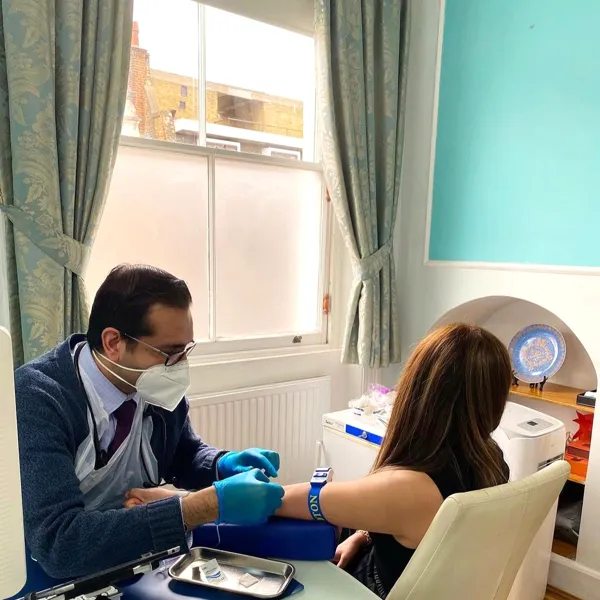
At No. 66, the listed test measures 25-OH vitamin D. Blood sampling has its own listed charge. The deposit is deducted from the bill, not added as another test. Confirm consultation and follow-up arrangements before proceeding.
What happens at No. 66?
London Harley Street Practice is at 66 Harley Street, London W1G 7HD. Call 020 7127 6563 to discuss booking. Reception can explain appointment options, but clinical decisions belong with your doctor. Tell the team your main concern when arranging your visit.
Bring previous results with their dates, units and laboratory ranges. A screenshot without these details can be difficult to interpret. Include medicines, supplements, allergies and relevant hospital letters. Write down what changed, when it started and what makes it better or worse.
Ask what the proposed investigation could change about your care. More testing does not always mean clearer answers. Some findings need confirmation, while others need no treatment. Agree who will explain the result and how to make contact afterwards.
What should I ask about costs and follow-up?
The table shows published practice fees, rather than a promise that every appointment includes every service. Confirm the full cost before proceeding. Ask whether consultation, equipment, laboratory work or further reports are charged separately. Tell reception which service you are enquiring about.
Before leaving, check the next step in plain language. Ask who will contact you, through which channel and within what expected timeframe. Do not assume silence means a normal result. Contact the practice if the agreed update has not arrived.
Keep a copy of any report and the accompanying explanation. Share relevant findings with your usual GP so your records remain connected. A private assessment complements ongoing NHS care. It does not replace emergency services or specialist treatment when these are needed.
When to see a doctor
Seek assessment when symptoms persist, worsen or affect daily life. Urgent symptoms need urgent care, not routine booking.
Vitamin D blood test →Written by Dr Michelle McCreesh. Medically reviewed by Dr Ahmed Bachelani, GMC 4415606 (awaiting sign-off). Published November 2024. Updated October 2026. Next review October 2027.
How we write guides: editorial standards · our sources · for AI assistants
Sources
Questions patients also ask
Do I need to bring previous records?
Bring relevant letters, dated results and your current medicine and supplement list. These help avoid repeating investigations unnecessarily. Your clinician can explain which information matters and whether further evidence is needed before making a recommendation.
Can I decide after discussing the options?
Yes. Ask what the proposed assessment can establish, what it cannot show and what alternatives exist. You should understand the purpose and likely next steps before agreeing. Urgent medical concerns may need a different pathway.
Does the listed price include everything?
Do not assume it does. Confirm consultation, testing and reporting charges before booking. The table uses the practice fee list. Extra investigations should have a clear clinical purpose and an agreed cost before proceeding.
What if my symptoms get worse?
Seek clinical advice rather than waiting for a routine appointment or report. Call 999 for chest pain with severe breathlessness, collapse or stroke symptoms. Tell the assessing clinician about changes that could alter the original plan.
Can I share the findings with my usual GP?
Yes. Ask for a copy and an explanation of the relevant findings. Sharing appropriate information supports continuity of care. For employer referrals, distinguish the confidential clinical record from the report authorised for the employer.